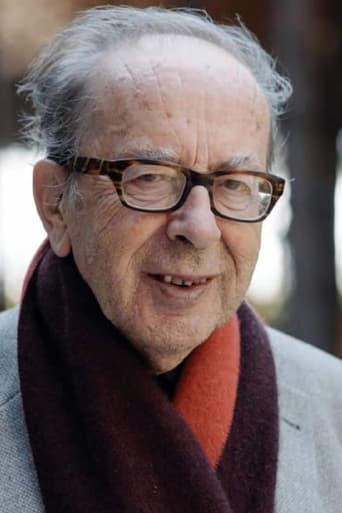
Person
Ismail Kadare
Writing · Born 1936-01-28 · Gjirokastër, Albania
Biography
Ismail Kadare (spelled Ismaïl Kadaré in French; born 28 January 1936) is an Albanian novelist, poet, essayist, screenwriter, and playwright. He is a leading international literary figure and intellectual. He focused on poetry until the publication of his first novel, The General of the Dead Army, which made him famous internationally. In 1992, Kadare was awarded the Prix mondial Cino Del Duca; in 1998, the Herder Prize; in 2005, the inaugural Man Booker International Prize; in 2009, the Prince of Asturias Award of Arts; and in 2015, the Jerusalem Prize. He was awarded the Park Kyong-ni Prize in 2019, and the Neustadt International Prize for Literature in 2020. In 1996, France made him a foreign associate of the Académie des Sciences Morales et Politiques of France, and in 2016, he was a Commandeur de la Légion d'Honneur recipient. He has been nominated for the Nobel Prize in Literature 15 times. Since the 1990s, Kadare has been asked by both major political parties in Albania to become a consensual President of Albania, but has declined. His nominating juror for the Neustadt Prize wrote: "Kadare is the successor of Franz Kafka. No one since Kafka has delved into the infernal mechanism of totalitarian power and its impact on the human soul in as much hypnotic depth as Kadare." His writing has also been compared to that of Nikolai Gogol, George Orwell, Gabriel García Márquez, Milan Kundera, and Balzac. Living in Albania during a time of strict censorship, Kadare devised cunning stratagems to outwit Communist censors who had banned three of his books, using devices such as parable, myth, fable, folk-tale, allegory, and legend, sprinkled with double-entendre, allusion, insinuation, satire, and coded messages. In 1990, to escape the Communist regime and its Sigurimi secret police he defected to Paris. His works have been published in 45 languages. The New York Times wrote that he was a national figure in Albania comparable in popularity perhaps to Mark Twain in the United States, and that "there is hardly an Albanian household without a Kadare book." Kadare is regarded by some as one of the greatest writers and intellectuals of the 20th and 21st centuries, and as a universal voice against totalitarianism. He is the husband of author Helena Kadare, and the father of United Nations Ambassador, and UN General Assembly Vice President, Besiana Kadare. Ismail Kadare was born in the Kingdom of Albania during the reign of King Zog I. He was born in Gjirokastër, an historic Ottoman Empire fortress mountain city of tall stone houses in southern Albania, a dozen miles from the border with Greece. He lived there on a crooked, narrow street known as "Lunatics' Lane". His parents were Halit Kadare, a post office employee, and Hatixhe Dobi, a homemaker, who had married in 1933 when his mother was 17 years old. On his mother's side of the family, his great-grandfather was a Bejtexhi of the Bektashi Order, known as Hoxhë Dobi. Though he was born into a Muslim family, Kadare himself was an atheist. ... Source: Article "Ismail Kadare" from Wikipedia in English, licensed under CC-BY-SA 3.0.
Known for
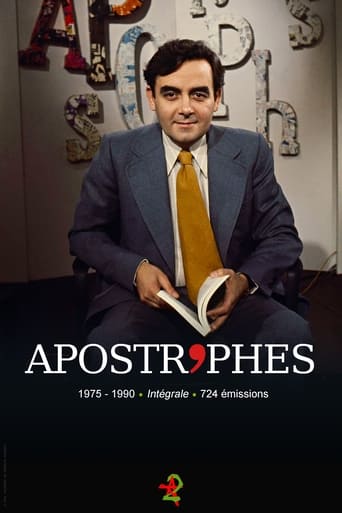
Apostrophes
Self
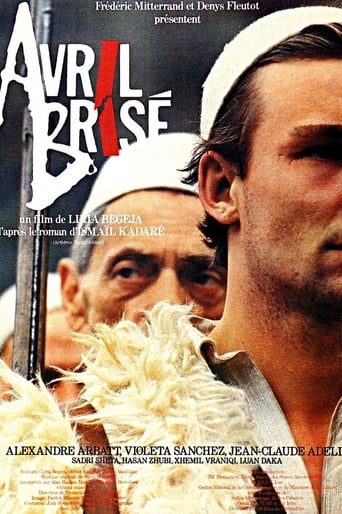
Broken April
Novel
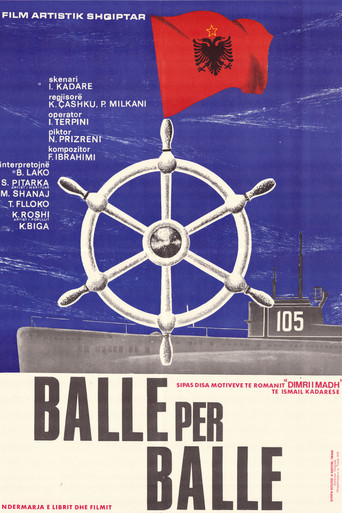
Face to Face
Screenplay
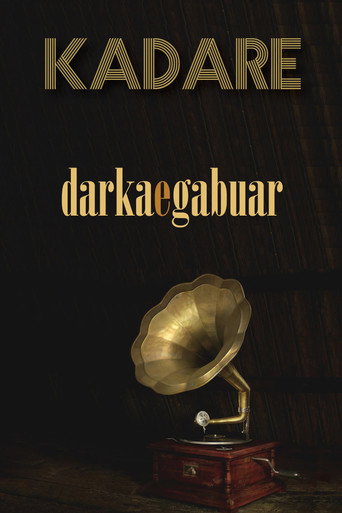
Darka e gabuar
Writer
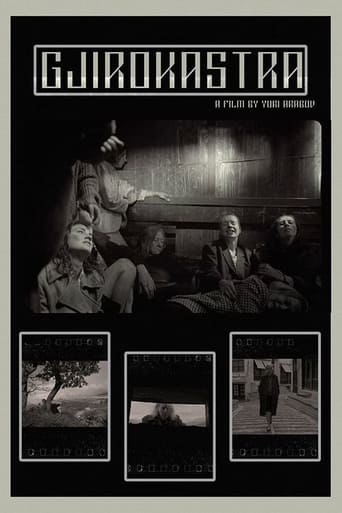
Gjirokastra
Screenplay
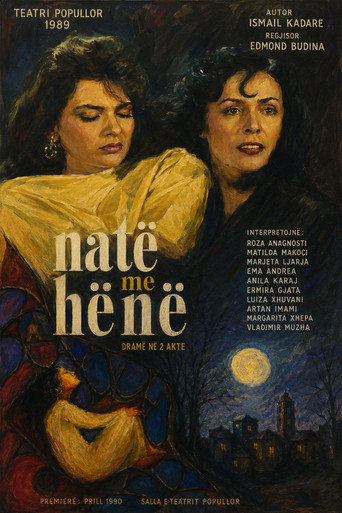
Natë me hënë
Writer
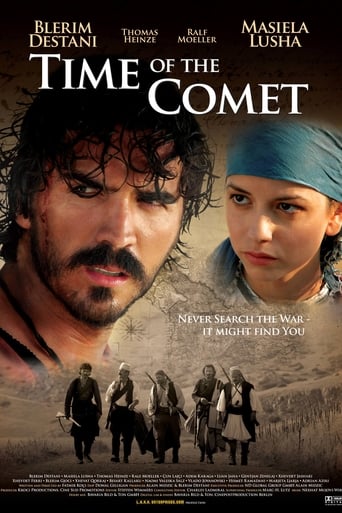
Time of the Comet
Novel
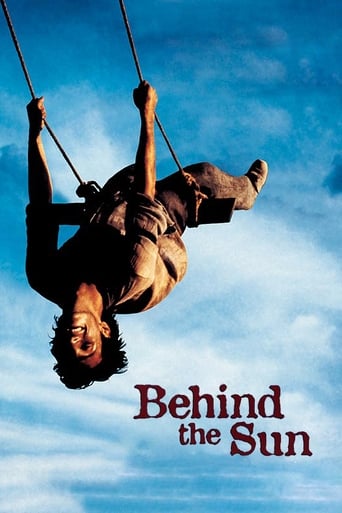
Behind the Sun
Novel
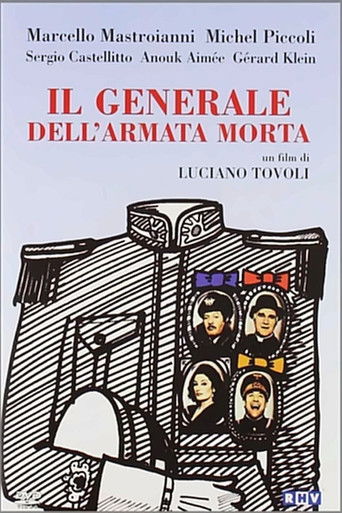
The General of the Dead Army
Novel
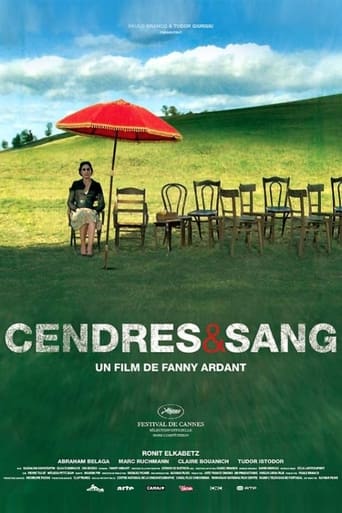
Ashes and Blood
Novel
Filmography
- 2024GjirokastraScreenplay
- 2011Darka e gabuarWriter
- 2009Ashes and BloodNovel
- 2008Time of the CometNovel
- 2001Behind the SunNovel
- 1990Natë me hënëWriter
- 1989The Return of the Dead ArmyStory
- 1987Broken AprilNovel
- 1985Broken AprilWriter
- 1983The General of the Dead ArmyNovel
- 1979The Radio StationNovel
- 1979Face to FaceScreenplay
- 1975ApostrophesSelf
- 1969Why Are the Drums Rumbling?Book
Follow their work on Vescene
Rate films and shows on two axes — quality and fun — and share taste with friends.