Person
Franklin Urteaga
Directing
Biography
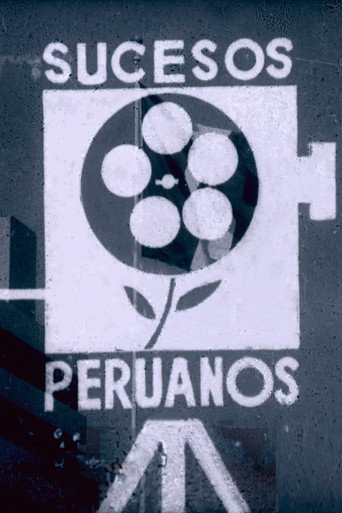
Franklin Urteaga Cazorla, a prolific Peruvian journalist and filmmaker, was born in Lima in 1913. He was the son of historian, politician, and educator Horacio Urteaga, and the great-grandson of Bartolomé Herrera, a conservative priest, politician, and intellectual. Urteaga completed his schooling at La Recoleta School. In the 1930s, he traveled through several European cities—Berlin, Moscow, Paris, and Barcelona—where he connected with writers, intellectuals, and fellow Latin American exiles. During the Spanish Civil War, he fought on the Republican side and, along with other compatriots, was present at the funeral of Peruvian poet César Vallejo at the Montrouge cemetery in Paris on April 19, 1938. While in Spain, he became friends with scenographer and playwright Santiago Ontañón, who encouraged him to explore opportunities in Peru’s film industry (Bedoya, 2009). Ontañón would later arrive in Peru in 1949 to direct and teach at the newly established theater company of the National University of San Marcos (UNMSM). Upon returning from Europe, Urteaga worked for many years as a political, cultural, and international journalist for local newspapers such as El Comercio, La Prensa, and Última Hora. He published two books: El Vaticano y la guerra (Lima, 1944) and Por qué soy amigo de la URSS (Lima, 1945), both addressing global political issues. In 1948, he founded and directed the short-lived weekly IZQUIERDA. It was in 1950 that he fully entered the Peruvian audiovisual scene as a film producer, a field he would go on to lead and officially represent starting in 1952. Between 1950 and 1956, he produced over ten documentaries on national themes, which were screened both in Peru and abroad. In September 1956, with democracy newly restored and frustrated by the government’s persistent inaction in enforcing the 1944 law promoting and supporting cinematographic activity (which required cinema exhibitors to allocate a portion of ticket sales to newsreel producers), Urteaga took the bold step of independently launching the newsreel series Sucesos Peruanos. The first edition premiered on September 28, 1956, marking the beginning of a continuous run of 456 editions—released biweekly or monthly—spanning more than 23 years and documenting a wide range of events in Peru until 1979. Franklin Urteaga also played an active role, alongside filmmaker Armando Robles Godoy, in lobbying the military government led by General Juan Velasco Alvarado for the passage of a new cinema law—Law 19327. This law, enacted in 1972, significantly boosted the national film industry and paved the way for the emergence of many now-renowned Peruvian directors during its 20-year enforcement, from 1972 to 1992.
Known for
Piura
Producer
Sucesos Peruanos
Director
Machu Picchu
Producer
Piura, Tierra de Esperanza
Director
El pan nuestro de cada día
Producer
Lima es así
Producer
Lima, la capital católica de América
Producer
Cuajone y Toquepala
Director
Desafío al Mar
Producer
En el corazón de la tierra
Director
Filmography
- 1976Piura, Tierra de EsperanzaDirector
- 1976Castilla Soldado y PatriotaDirector
- 1973Cuajone y ToquepalaDirector
- 1973Acero es ProgresoDirector
- 1969Desafío al MarProducer
- 1968Lo que hizo un hombreProducer
- 1968En el corazón de la tierraDirector
- 1962PiuraProducer
- 1961Lima es asíProducer
- 1957Sucesos PeruanosDirector
- 1956Cajamarca, tierra del solProducer
- 1956La feria de octubreProducer
- 1956Un palacio para el deporteDirector
- 1955El solitario de SayánProducer
- 1955El pan nuestro de cada díaProducer
- 1955Lima, la capital católica de AméricaProducer
- 1954Las naves de OnassisProducer
- 1953Machu PicchuProducer
- 1953Castilla, soldado de la leyProducer
- 1950Lima, ciudad de los virreyesProducer
- —La catástrofe del CuzcoProducer
Follow their work on Vescene
Rate films and shows on two axes — quality and fun — and share taste with friends.